
"coffee tree environment"
8000 article(s) found

Coffee growing environment
A warm climate with temperatures ranging from 15 ° C to 25 ° C, and rainfall of 1500 mm to 2000 mm throughout the year, at the same time, its rainfall should be able to match the flowering cycle of coffee trees. Of course, in addition to seasonal and rainfall coordination, there must be fertile soil. The soil most suitable for coffee cultivation is fertile, well drained soil containing pozzolanic matter. In addition, although sunlight is coffee

Introduction of Coffee Plantation in Taiwan Coffee producing area
In 2006, thousands of coffee trees shipped from Taiwan officially settled on a hillside in the town of Gaoyao Xiaoxiang. Our boss is from Taiwan, and he and his family are very fond of growing coffee trees. when he came to Zhaoqing to develop the electronics industry, he specially brought high-quality Arabica coffee trees from Taiwan and planted them in the hot land of Zhaoqing. Talking about the original intention of planting coffee trees

Requirements of Coffee on Ecological Environment Environmental requirements for planting Coffee trees
Small seed coffee is native to the lower part of the Ethiopian rainforest in northern Africa. The temperature is relatively low, with an average annual temperature of 20 degrees. The origin of medium-grain coffee is near the equator. Therefore, small seed coffee has stronger cold tolerance and wider adaptability than medium grain coffee. Medium-grain coffee requires a slightly higher temperature. First, the requirement for temperature should be based on the natural conditions of Yunnan, and the suitable planting area of coffee should be selected.
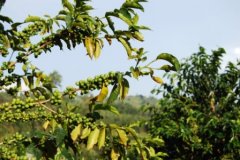
Yemeni coffee boutique coffee hometown
The growth environment of boutique coffee beans also has higher requirements. Generally grow at an altitude of 1500 meters or even more than 2000 meters above sea level, with appropriate precipitation, sunshine, temperature and soil conditions. Some world-famous coffee beans also have a special geographical environment, such as the alpine clouds in the Blue Mountains, the free shade provided by the afternoon clouds in Kona, and the volcanic ash soil in Antigua.

The difference between Hawaiian kona coffee and blue mountain coffee_Hawaii kona coffee growing environment
Professional coffee knowledge exchange More coffee bean information Please pay attention to coffee workshop (Weixin Official Accounts cafe_style) If Blue Mountain Coffee is the best actor in the eyes of coffee fans, Hawaii Kona Coffee is undoubtedly the generation of Audrey in the coffee industry. Hepburn! The reason for this is that Hawaii's Kona coffee beans have the most perfect appearance, its fruit is unusually full, and

Panamanian coffee bean flavor, Panamanian coffee bean taste
Following caf é vdailycom (Wechat official account vdailycom) found that Beautiful Caf é opened a small shop of its own (Panama) well-known representative coffee: Panama (Panama) Panama bordering Costa Rica to the west and Colombia to the east of South America, most of its coffee is grown in the mountains near Costa Rica to the west. The flavor and texture of Panamanian coffee are medium and uniform, quite similar.
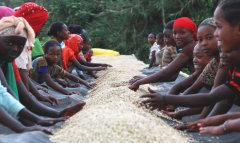
The six modes of growing coffee in Ethiopia introduce in detail the flavor of Arsi sun-dried coffee beans.
At present, about 25% of the Ethiopian population directly or indirectly depends on coffee production for a living. The majority of farmers use traditional planting methods. Artificial care of coffee trees, the use of organic fertilizers, do not use harmful pesticides and herbicides, etc. Therefore, most of the coffee produced by Ethiopia is organic coffee. The planting pattern in Ethiopia is complex, ranging from wild coffee in the original forest to a strong contrast to it.

Kenya bourbon coffee tree cultivation environment Nyeri Central Mountain region
It entered Kenya in the 19th century, when Ethiopian coffee drinks were imported to Kenya via South Yemen. But it wasn't until the early 20th century that bourbon coffee trees were grown by St. Austin Mission introduced. Kenya coffee is mostly grown at altitudes of 1500- 2100 meters and harvested twice a year. To ensure that only ripe berries are picked, people must be in the forest.

Introduction to the characteristics of flavor and taste of Panamanian coffee manor
The oceanic climate is a huge system that covers the entire hemisphere. Other currents in the Caribbean originate as far away as Iceland, while some east-west currents in the Pacific Ocean originate half a world away off the coasts of Japan and Indonesia. On the island of Panama, which is less than 100 kilometers wide, these global climate systems interweave and collide with each other, creating an amazing microatmosphere.

The main coffee-producing area of Colombia, the Andes.
The planting environment edits Colombia's suitable climate to provide a real natural pasture for coffee. Coffee trees in Colombia are mainly cultivated in the Andes, on steep slopes about 1300 meters above sea level, where the annual temperature is about 18 degrees Celsius, annual rainfall is 2000 to 3000 mm, latitude 1-11 15 north and longitude 72-78 west. The specific range of elevation can be exceeded.

Coffee farmers are more accustomed to using water washing treatment to introduce the coffee production environment of Nicaraguan coffee-producing countries.
The suitable climate provides an excellent growth environment for the cultivation of coffee. The mineral-rich pozzolanic soil provides abundant nutrients for the cultivation of coffee trees. High-quality Nicaraguan coffee is also grown in the northern and central highlands of the country. The best coffee is produced in Matagalpa (Matagalpa), which is highly respected by coffee lovers all over the world.

The planting technology of coffee tree introduces the environment in which coffee tree is suitable to grow.
Field management of loosening soil and weeding: when the seedling height is 3cm to 6cm, the weak or overdense seedlings are pulled out; when the seedling height is 10cm and 13cm, the plant distance is about 30cm. Soil loosening and weeding were carried out at the same time between seedlings and fixed seedlings to keep the soil loose. Coffee beans are more drought-tolerant, and the soil can grow normally when the soil moisture is maintained. During the drought, the coffee beans should be properly watered, but there should be less squatting seedlings during the seedling fixing period.

Katim Blue Mountain Coffee Bean planting Environment and Flavor description the degree of Grinding in the region where the varieties are produced
Katim Blue Mountain Coffee Bean growing Environment Flavor description of the varieties produced in the region grind KARTIKA RED tall trees with bright red pointed leaves and long red cherries. It is generally a natural hybrid variety of iron pickup. Planting area Lake Toba, Aceh. The Netherlands brought this variety to be planted at high elevations on the island of Sumatra. After losing for a period of time, it is a lot.

Introduction to the flavor and taste of Panamanian Coffee Manor with medium thickness
The interaction between climate and environment creates a fascinating flavor, Willem Boot, the owner of two Panamanian farms, Finca Sofa and Finca La Mula, who also grow award-winning Rosa Coffee. In February 2015, I went to Finca La Mula Manor with the professional manager of Boot, along with my friend Kelly Hartmann, who is local in Panama.

Panamanian Coffee Flavor description, Grinding degree, Taste, characteristics of varieties, introduction of Fine Coffee beans
La Mula is a dense forest, with huge shade trees covering most of the planting area. There is also a second layer of shade trees that grow lower than them, and under this vault are rosy summer coffee trees that have a unique flavor because of the environment. Boot tells us that if the cloud period is regular and becomes a regular phenomenon, it shows that it will affect the trees.

Finca Deborah Deborah Coffee Manor in Panama introduces the cherry growing environment of Rosa coffee.
Located more than 1900 meters above sea level, Finca Deborah sits in the depths of Mount Chiriki and is shrouded in dense clouds for most of the year. The plantation has a beautiful environment, beautiful natural environment and rich species of rare animals and plants. Geisha give full play to their potential under the shade of the dense rainforest canopy. He is one of the tallest and most remote coffee farms in Panama, in these seas

Introduction of Cupid Coffee Variety and Flavor Manor in Western Panama
The interaction between climate and environment creates a fascinating flavor, Willem Boot, the owner of two Panamanian farms, Finca Sofa and Finca La Mula, who also grow award-winning Rosa Coffee. In February 2015, I went to Finca La Mula Manor with the professional manager of Boot, along with my friend Kelly Hartmann, who is local in Panama.

Planting techniques and soil Environment of Coffee trees
(1) weeding, covering the young coffee garden, weeds are easy to breed, especially in the rainy season, weeding should be done once a month. If the labor force is sufficient, clean the grass should be removed first. Adult coffee garden can be weeded once every 2 to 3 months. If you use herbicides, you should be careful not to spray on the branches and leaves of coffee, and it is more important and prudent to use them in young coffee gardens. Coffee has shallow roots and is vulnerable to adverse climates such as high temperature and drought.

Introduction to Apollo Coffee Farm in Panama _ description of Apollo Coffee Flavor in Balu volcanic area
Professional coffee knowledge exchange more coffee bean information please follow coffee workshop (Wechat official account cafe_style) Panama Baru volcanic area (Panama Volan Baru Series Apollo) Apollo Coffee Panamanian Coffee Baru volcanic area (Panama Volan Baru Series Apollo) Apollo Coffee was introduced into Panama in 1780

Coffee trees can grow coffee beans in several years-introduction to the planting environment of manors in the country of origin
Coffee trees can grow coffee beans in several years. In fact, the Arabs began to grow coffee in 525 B.C., and chewing fried coffee beans became popular in the Arab region. In 890 AD, Arab merchants sold coffee beans to Yemen, and Yemenis made coffee beans into drinks for the first time. In the 15th century, coffee was introduced into Europe and Asia